Home
Process Re-designing & Automation
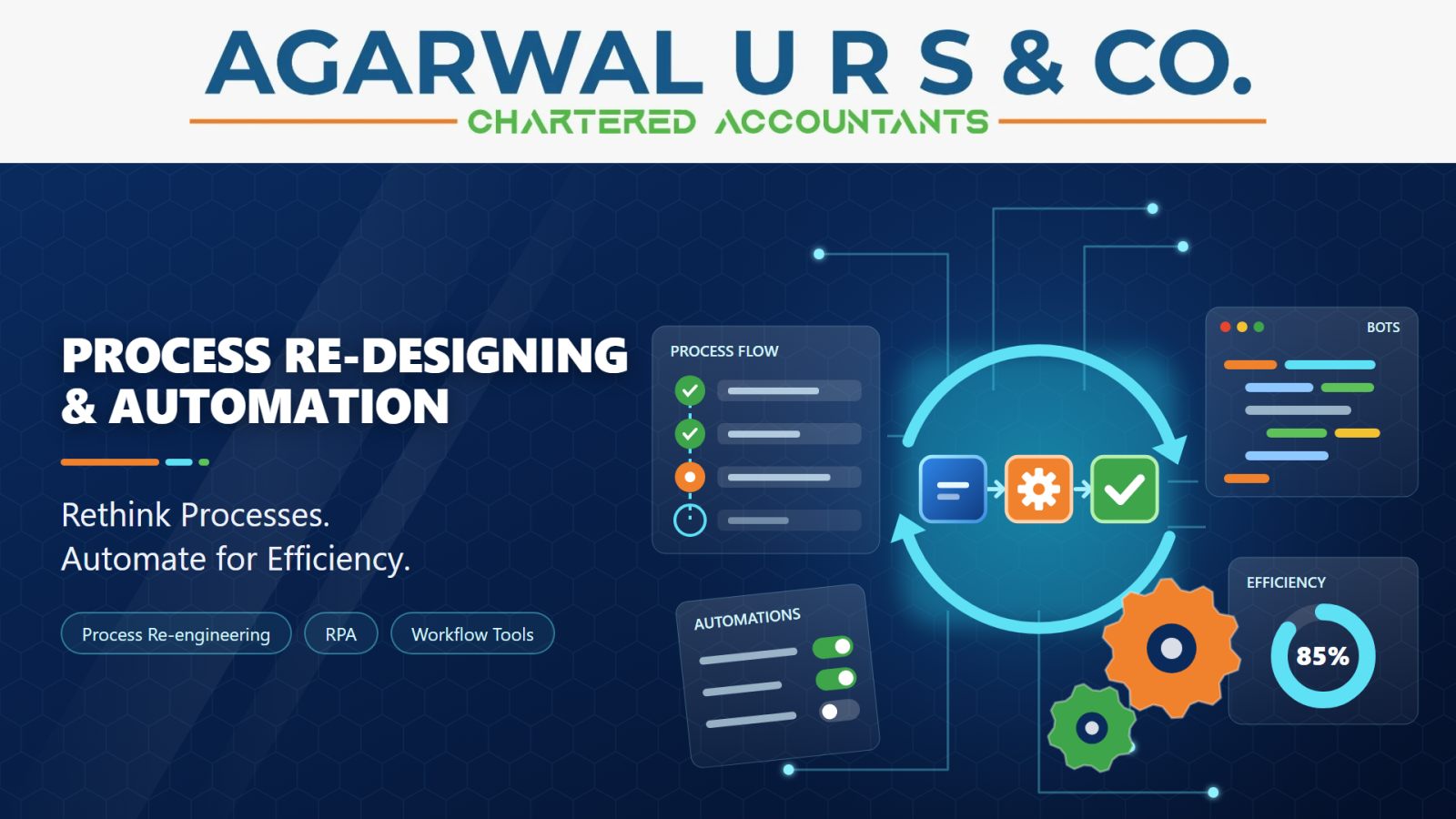
Most Indian businesses grow their processes organically, layering new approvals, spreadsheets and email threads onto workflows that were never designed for the volume they now handle. Process re-designing and automation involves mapping how work actually flows through an organisation, identifying where time, accuracy and control are being lost, and then rebuilding those workflows using automation tools such as robotic process automation (RPA), workflow management software and system integrations. The objective is not automation for its own sake, but a leaner process that produces the same or better outcome with fewer manual touchpoints. This affects finance, procurement, HR, sales and compliance teams alike, since inefficiency rarely stays confined to one department.
Why This Matters
Manual, undocumented processes create hidden risk. They depend on specific individuals, are prone to human error at high volumes, and make it difficult to demonstrate control to auditors, lenders or investors during due diligence. As transaction volumes grow, the cost of a poorly designed process compounds quickly, showing up as delayed month-end closes, duplicate payments, missed compliance deadlines, or reconciliation differences that take days to resolve. A well re-designed and partly automated process reduces turnaround time, lowers the error rate, frees up skilled staff from repetitive work, and gives management a clearer, faster view of what is actually happening in the business.
How We Help
Process Mapping and Diagnosis
We begin by documenting the process as it is actually performed, not as it is assumed to work, through interviews, walkthroughs and review of existing documentation. This surfaces duplicate approvals, manual re-keying of data, unnecessary handoffs, and points where errors typically originate, giving both the client and our team a shared, evidence-based picture of the current state.
Redesign of the Target Workflow
Once bottlenecks are identified, we design a leaner target process that removes redundant steps, consolidates approvals where appropriate, and builds in the right control points at the right places, rather than controls scattered throughout out of habit. The redesign is grounded in what is practically achievable with the organisation's existing systems and team structure.
Selection and Configuration of Automation Tools
We help identify where RPA bots, workflow automation platforms, or simple system-level configuration changes can replace manual, repetitive steps such as data entry, report compilation, reconciliations and routine email-based follow-ups. Tool selection is matched to the organisation's budget, IT maturity and the actual complexity of the task, rather than defaulting to the most elaborate available solution.
Implementation, Testing and Handover
We support implementation alongside the client's IT function or vendor, test the redesigned process under real transaction scenarios, and prepare simple process documentation and training so that the new workflow is genuinely adopted by the team rather than abandoned after a few weeks.
Who Needs This
- Growing companies where manual processes have not kept pace with transaction volumes
- Organisations preparing for private equity investment or acquisition due diligence
- Businesses experiencing frequent errors, delays or reconciliation issues in finance and operations
- Groups looking to standardise processes across multiple branches, plants or subsidiaries
Our Approach
We favour practical, incremental automation over large, high-risk overhauls, so that improvements can be implemented in phases and benefits are visible early. Our recommendations are always tested against the realities of the client's team size, systems and budget, and we remain involved through implementation rather than handing over a report and stepping away.
Get in Touch
To discuss how we can support you with process re-designing and automation, write to us at info@agarwalurs.com.
Get In Touch