Home
Exit Strategy Planning
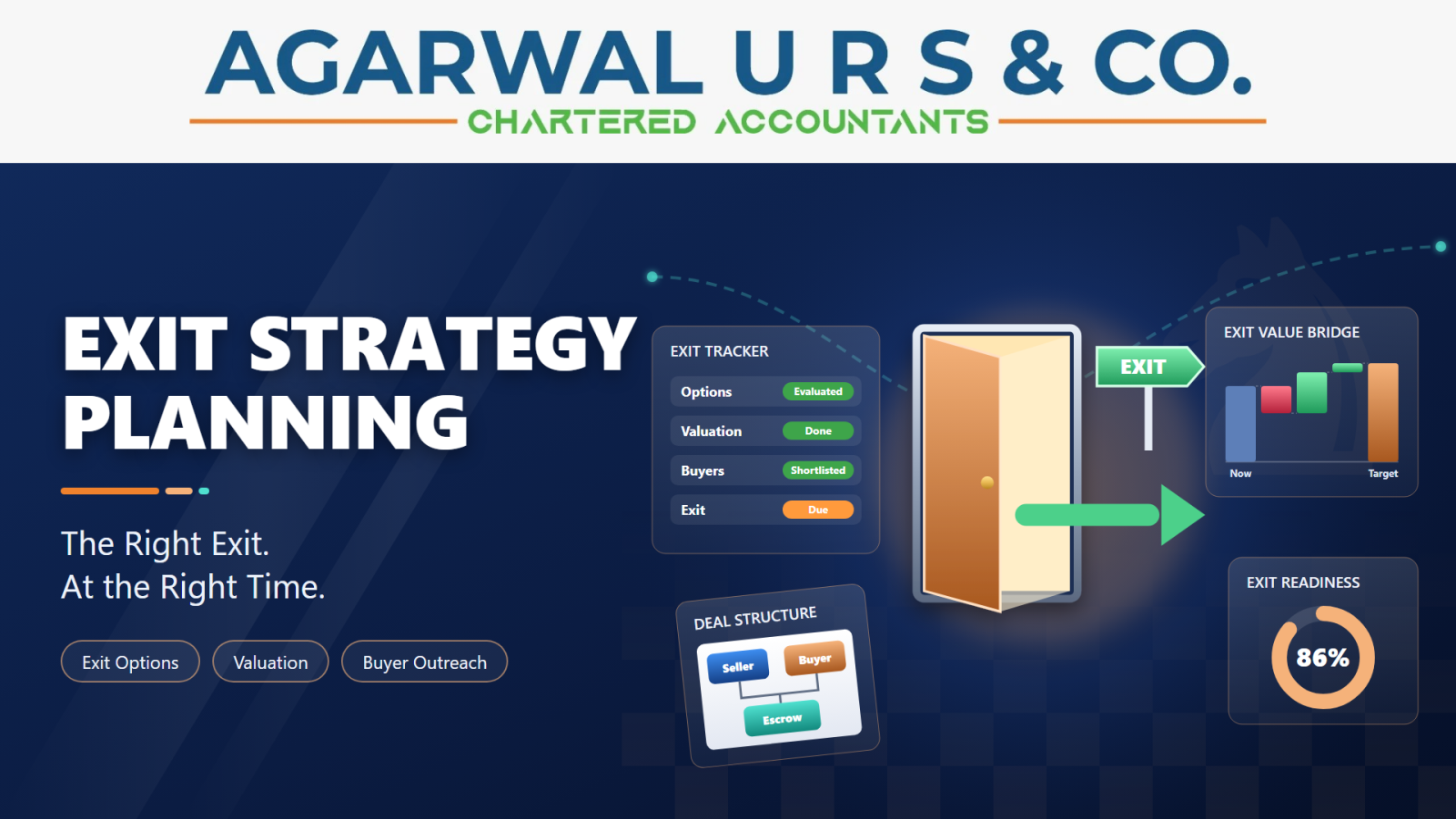
Acquiring and turning around a stressed asset is only half of the investment cycle; realising value through a well-timed and well-structured exit is what ultimately determines the return on that investment. Investors and acquirers need to plan, well before the exit event itself, how they intend to monetise their stake, whether through a strategic sale, a public listing, or refinancing of the underlying debt, and how that route will be affected by the tax and regulatory position built up during the turnaround. This planning matters to private equity and special situations investors, promoters who took control through a resolution plan, and lenders holding equity or hybrid instruments received as part of a restructuring.
Why This Matters
An exit that is planned only when the opportunity arises, rather than anticipated in advance, tends to leave value on the table, whether through avoidable tax cost, a rushed process that limits competitive tension among buyers, or a capital structure that is not attractive to the intended universe of acquirers or investors. Because the tax and regulatory treatment of a sale, listing, or refinancing can vary significantly depending on how the original acquisition and subsequent restructuring were structured, decisions taken years earlier can materially affect exit outcomes. Building exit optionality into the investment thesis from the outset, and revisiting it as the turnaround progresses, is what allows an investor to exit on favourable terms when the time comes.
How We Help
Exit Route Evaluation
We help investors assess the relative merits of a strategic or financial sale, a public listing, or a refinancing of existing obligations, considering the readiness of the business, prevailing market conditions, and the investor's own return objectives and holding period.
Tax-Efficient Exit Structuring
We advise on structuring the chosen exit route to manage capital gains tax and other tax costs efficiently, taking into account the manner in which the original stake was acquired, any restructuring undertaken during the turnaround, and the holding period and character of the instruments being exited.
Regulatory and Approval Considerations
We identify the regulatory approvals, disclosures, and procedural steps that the chosen exit route will require, including any conditions carried over from the original resolution plan or restructuring, so that the exit process can be planned around realistic timelines rather than assumed ones.
Exit Readiness and Value Enhancement
We work with management in the period leading up to an exit to identify the financial, compliance, and operational improvements that will make the business more attractive to prospective buyers or investors, helping to close gaps that could otherwise depress valuation or slow down the transaction.
Who Needs This
- Private equity and special situations investors holding stakes acquired through a distressed transaction
- Promoters and acquirers who gained control through an approved resolution plan
- Lenders holding equity or hybrid instruments received as part of a debt restructuring
- Boards and management teams preparing a turned-around business for sale or listing
Our Approach
We encourage clients to think about the exit at the time the acquisition is structured, not only when a sale process is imminent, since many of the choices that determine exit efficiency are made far earlier in the investment cycle. As the exit approaches, we provide practical, current advice on structuring, tax positioning, and readiness, coordinating closely with legal and investment banking advisors so that the exit is executed smoothly and on terms that reflect the value created during the turnaround.
Get in Touch
To discuss how we can support you with exit strategy planning, write to us at info@agarwalurs.com.
Get In Touch