Home
Enterprise Risk Management Services
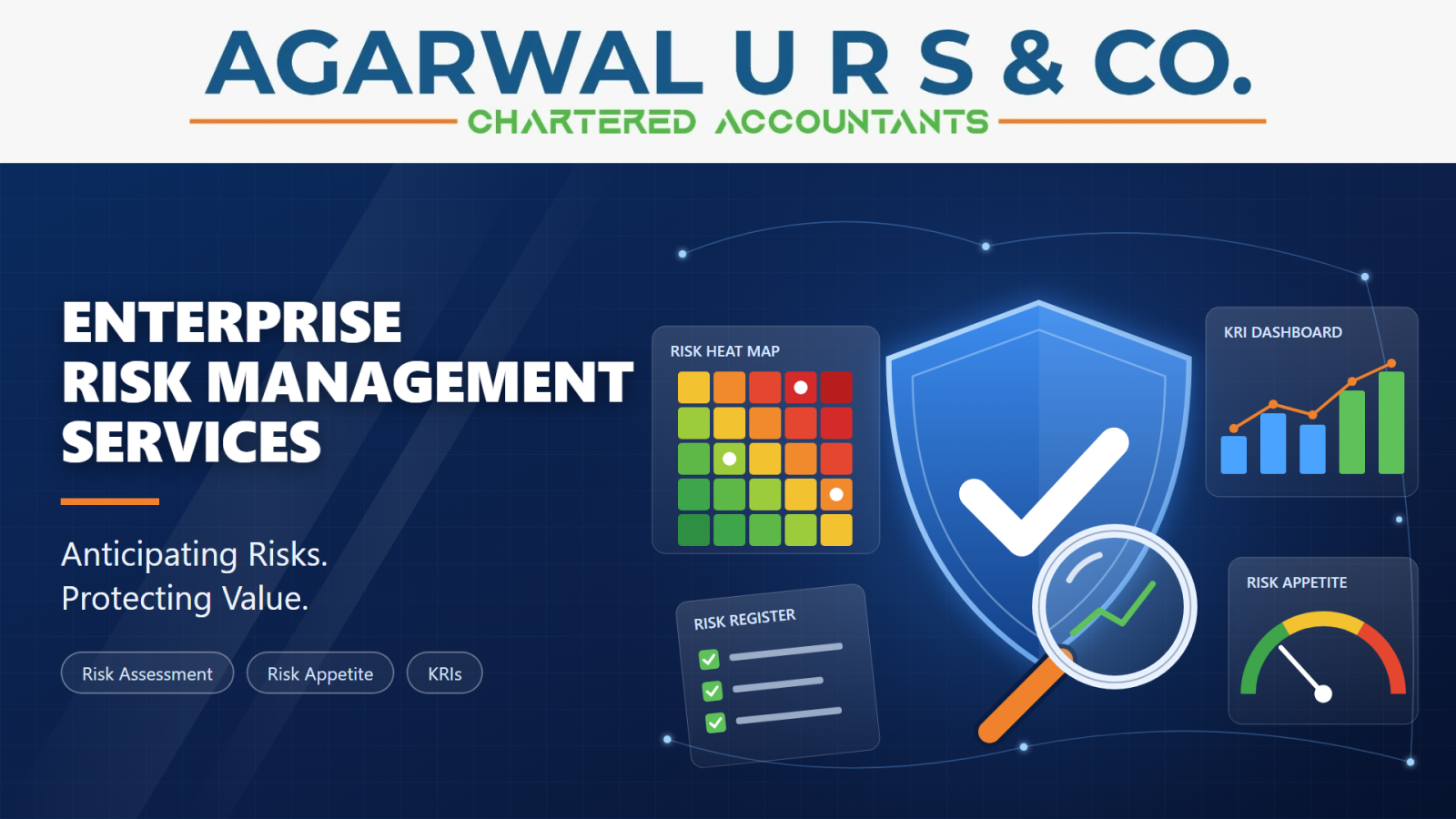
Enterprise Risk Management, commonly referred to as ERM, is a structured, organisation-wide framework for identifying, assessing, prioritising, and responding to the risks that could affect an entity's objectives. Rather than looking at risk in isolated silos, finance handling financial risk, IT handling cyber risk, operations handling process risk, ERM brings these views together so the board and senior management see the full risk picture in one place. In the Indian context, listed companies are required under SEBI's Listing Obligations and Disclosure Requirements to have a documented risk management framework, but the real value of ERM extends well beyond regulatory compliance.
Why This Matters
Businesses that manage risk reactively, only after a disruption has already occurred, tend to make poorer decisions under pressure and often absorb avoidable losses. A mature ERM framework helps an organisation anticipate strategic, operational, financial, and compliance risks well before they materialise, and gives leadership a common language to discuss trade-offs between growth ambitions and the risks that growth introduces. It also builds credibility with investors, lenders, and regulators, who increasingly expect to see evidence of structured risk oversight at the board level.
How We Help
Risk Identification and Assessment
We facilitate structured workshops with business unit heads and senior management to surface the risks that genuinely threaten the organisation's objectives, rather than relying on generic risk lists copied from templates. Each risk is assessed for likelihood and impact, and mapped against the specific business context.
Risk Register Development
We build a practical, living risk register that captures key risks, existing mitigations, risk owners, and residual risk ratings. The register is designed to be updated periodically rather than prepared once and forgotten, so it remains a genuine management tool.
Risk Appetite and Tolerance Setting
We help the board and management articulate how much risk the organisation is willing to accept in pursuit of its objectives, translating abstract risk appetite statements into measurable thresholds that can guide day-to-day decision-making across functions.
Board and Risk Committee Reporting
We design reporting formats that give the board and risk management committee a clear, concise view of the organisation's top risks, movement in risk ratings over time, and the status of mitigation actions, supporting more informed oversight and satisfying SEBI disclosure expectations.
Who Needs This
- Listed companies required to maintain a risk management framework under SEBI regulations
- Large private companies and group entities with diversified business lines
- Organisations undergoing significant expansion, new market entry, or major capital investment
- Boards seeking stronger risk oversight following investor, lender, or rating agency scrutiny
Our Approach
We avoid imposing a heavy, bureaucratic ERM structure on organisations that are not ready for one. Instead, we start with the risks that matter most to the business today, build a practical register and reporting rhythm around them, and mature the framework over time as the organisation's risk management culture develops. Our goal is a framework that management actually uses to make decisions, not a document produced solely to satisfy an auditor or regulator.
Get in Touch
To discuss how we can support you with enterprise risk management, write to us at info@agarwalurs.com.
Get In Touch