Home
Pre & Post Acquisition Indirect Tax Advisory
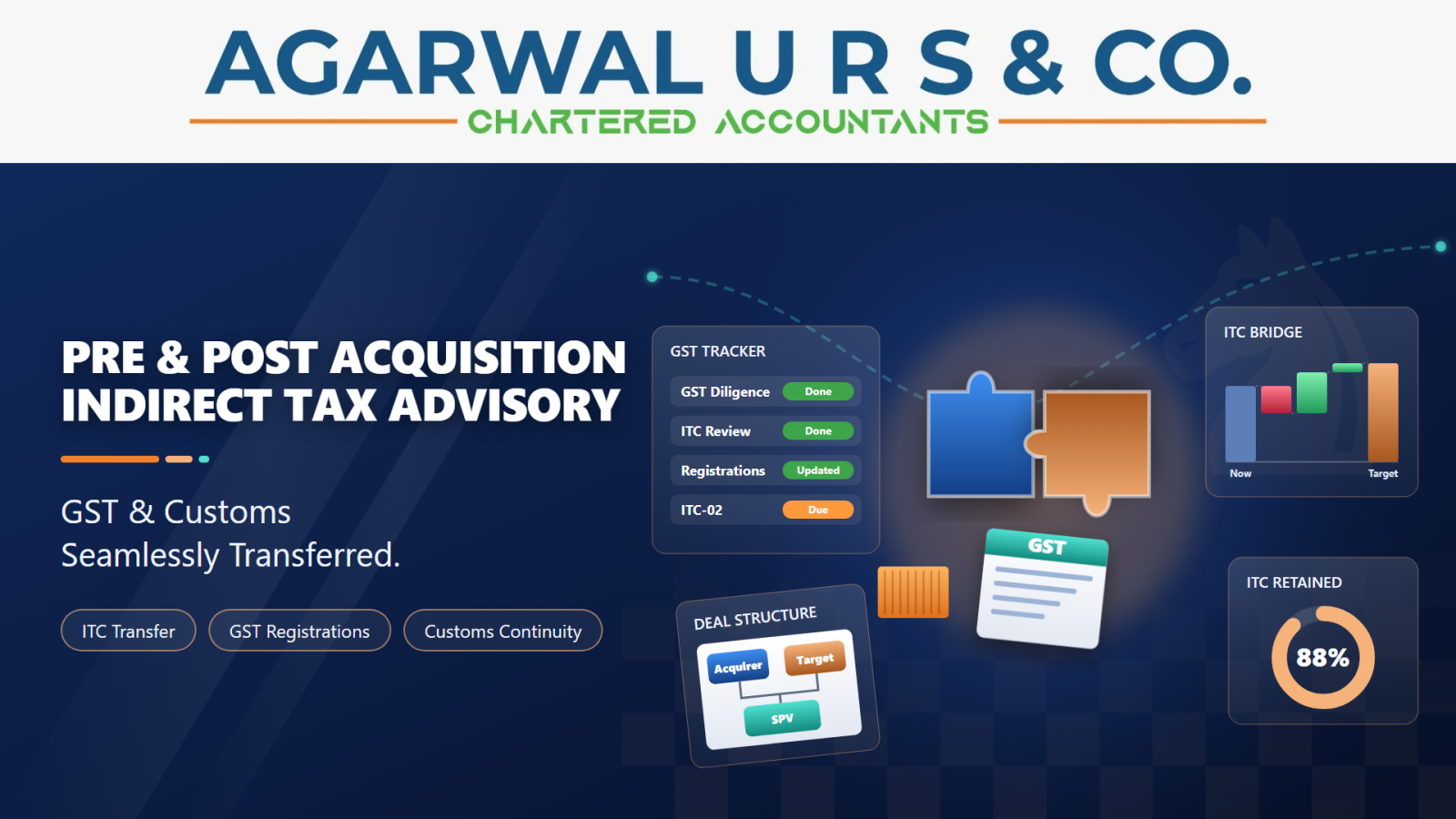
Every acquisition of a distressed business carries an indirect tax footprint that is easy to overlook amid the urgency of a resolution timeline, yet capable of surfacing as a significant cost long after closing. GST registrations, accumulated input tax credit, pending refunds, and legacy indirect tax liabilities of the target do not simply disappear on a change of control; they need to be identified, quantified, and either transferred, ring-fenced, or provided for. This affects resolution applicants, acquiring companies, and the officers of the corporate debtor who remain answerable for compliance during the transition.
Why This Matters
Indirect tax exposures tend to be transaction-specific and cumulative, arising from years of returns, credit claims, and departmental notices that a distressed company may not have actively managed. An acquirer who does not examine this history closely can find that input tax credit it expected to use is disputed or blocked, that registrations lapse or need to be recreated at an inconvenient moment, or that show-cause notices relating to the pre-acquisition period land on the restructured entity's desk. Addressing these issues proactively protects working capital and avoids disruption to the acquired business just as it is being stabilised.
How We Help
Input Tax Credit Continuity Review
We review the target's input tax credit ledgers, reconciliations, and reversal history to establish how much credit is genuinely available for use, whether it is at risk of lapsing on account of the acquisition structure chosen, and what steps are needed to preserve and carry it forward into the post-acquisition entity.
Registration and Structural Changes
We advise on the GST registration implications of the chosen acquisition route, whether that involves a transfer of business as a going concern, an asset transfer, or a change in constitution, and manage the practical steps of amending, surrendering, or obtaining fresh registrations so that supply chains and invoicing continue without interruption.
Legacy Liability Identification
We examine past returns, audit findings, and departmental correspondence to identify indirect tax liabilities, whether under GST or legacy indirect tax laws, that could attach to the acquired business, and we quantify the extent to which these are addressed, extinguished, or carved out under the acquisition or resolution structure.
Post-Acquisition Compliance Alignment
Once the transaction is implemented, we help align the target's indirect tax processes, invoicing systems, and return filings with the acquirer's own compliance framework, and we assist in responding to any pending notices or proceedings relating to the period before the change in control.
Who Needs This
- Resolution applicants and acquirers evaluating the indirect tax cost embedded in a distressed target
- Companies acquiring a business or undertaking as a going concern
- Management teams responsible for maintaining compliance during a transition in ownership
- Lenders and creditors assessing the net recoverable value of a resolution plan
Our Approach
We treat indirect tax review as an integral part of the acquisition timeline rather than an afterthought, coordinating closely with the legal and financial workstreams so that findings feed directly into the transaction structure and price. Our recommendations focus on practical continuity, keeping the acquired business compliant and operational, while addressing legacy exposures through the mechanisms available under the applicable law and process.
Get in Touch
To discuss how we can support you with pre and post acquisition indirect tax advisory, write to us at info@agarwalurs.com.
Get In Touch