Home
IT Strategy - Transition to newer optimal solution
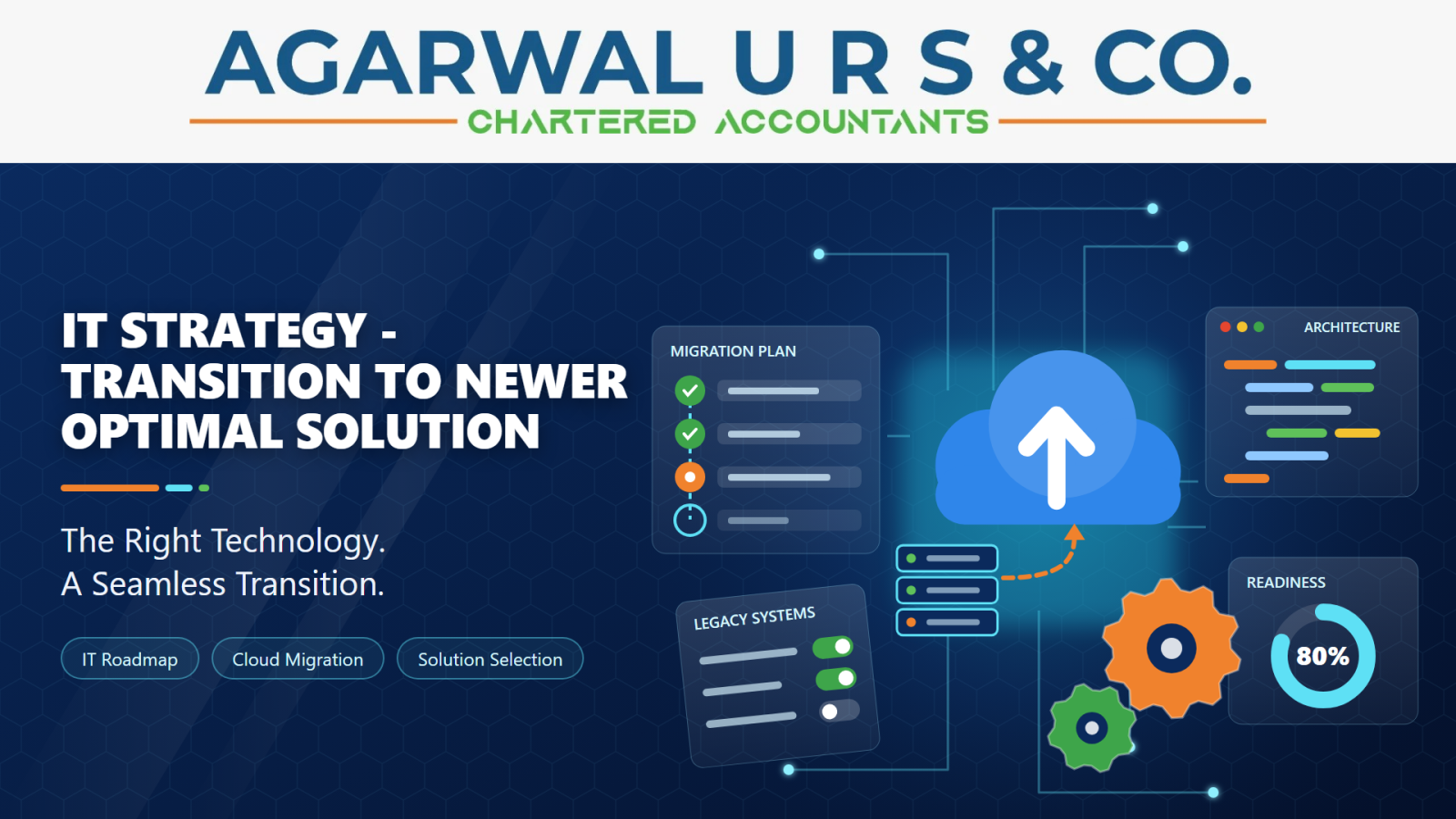
Many businesses in India continue to run critical operations on legacy accounting software, aging on-premise servers or ERP systems that were adequate a decade ago but now struggle to support current scale, reporting needs and regulatory requirements. IT strategy for transitioning to a newer, optimal solution involves objectively assessing the current technology landscape, evaluating available modern platforms, and planning a migration path that minimises disruption to day-to-day operations. This is relevant to owners, CFOs and IT heads who sense that their current systems are holding the business back but are unsure which direction to move in or how to get there without risk.
Why This Matters
Choosing the wrong platform, or migrating without adequate planning, can be more damaging than staying on an outdated system. Failed or poorly executed IT transitions commonly result in data loss, extended downtime, duplicate work during parallel runs, and frustrated teams reverting to manual workarounds. On the other hand, a well-planned transition to the right cloud or on-premise solution can materially improve reporting speed, data security, scalability and the ability to integrate with banks, GST systems and other statutory portals. Getting the strategy right before committing budget and time is far cheaper than correcting course mid-implementation.
How We Help
Current State Assessment
We evaluate the existing IT and ERP landscape, including software, infrastructure, data quality and how well current systems are actually meeting business needs, to establish a realistic baseline rather than relying on assumptions about what is working and what is not.
Solution and Vendor Evaluation
We help shortlist and compare suitable platforms and vendors against the organisation's specific requirements, industry practices, budget and growth plans, focusing on total cost of ownership and fit rather than being guided purely by vendor marketing or market popularity.
Migration Roadmap and Risk Planning
We design a phased transition roadmap that sequences data migration, integration, testing and cutover in a manner that limits disruption, identifies risks upfront such as data mapping gaps or process changes, and builds in contingency and rollback plans where feasible.
Transition Support and Stabilisation
During the actual cutover, we support coordination between internal teams and implementation vendors, help validate that the new system is performing as expected, and remain available through the stabilisation period when most transition issues typically surface.
Who Needs This
- Businesses still running on legacy, unsupported or heavily customised software
- Companies planning a move from on-premise systems to cloud-based platforms
- Organisations undergoing rapid growth that has outpaced their current IT setup
- Groups evaluating multiple vendor proposals and needing an independent assessment
Our Approach
We remain vendor-neutral in our recommendations, focusing on what genuinely fits the client's operations rather than any particular platform. Our involvement is practical and hands-on through the planning and transition period, since IT strategy advice that stops at a recommendation document rarely translates into a smooth, low-disruption migration.
Get in Touch
To discuss how we can support you with IT strategy and transition planning, write to us at info@agarwalurs.com.
Get In Touch